Hair Transplant in Turkey: What to Expect?
Understand hair transplants in Turkey, including FUE and DHI methods, candidacy, procedure steps, recovery, and potential risks. Get answers to common questions.
Medically reviewed by Dr. Ersun Cobanoglu · Last reviewed July 26, 2026 · 6 min read
Many people consider a hair transplant in Turkey to address hair loss. This procedure aims to move healthy hair follicles from one part of your head to areas where hair is thinning. The goal is to create a fuller, natural-looking head of hair. Clinics in Turkey often use modern techniques like FUE and DHI.
What is a hair transplant?
A hair transplant is a surgical procedure that moves hair from one part of your body to another. It treats hair loss by taking hair follicles – the tiny organs that grow hair – from an area with strong hair growth, called the donor area. These follicles are then placed into areas where hair is thinning or missing, known as the recipient area. The transplanted hair usually continues to grow naturally.
Two common methods for hair transplant are FUE (follicular unit extraction) and DHI (direct hair implantation). In FUE, individual follicular units – small groups of one to four hair follicles – are carefully extracted one by one from the donor area. These units are then implanted into small openings made in the recipient area. DHI is a modified FUE method where the extracted follicular units are implanted directly into the recipient area using a special tool called an implanter pen, without first making separate channel openings. Another method, less common today, is FUT (strip method), which involves removing a strip of skin with hair from the donor area.
Who is it suitable for?
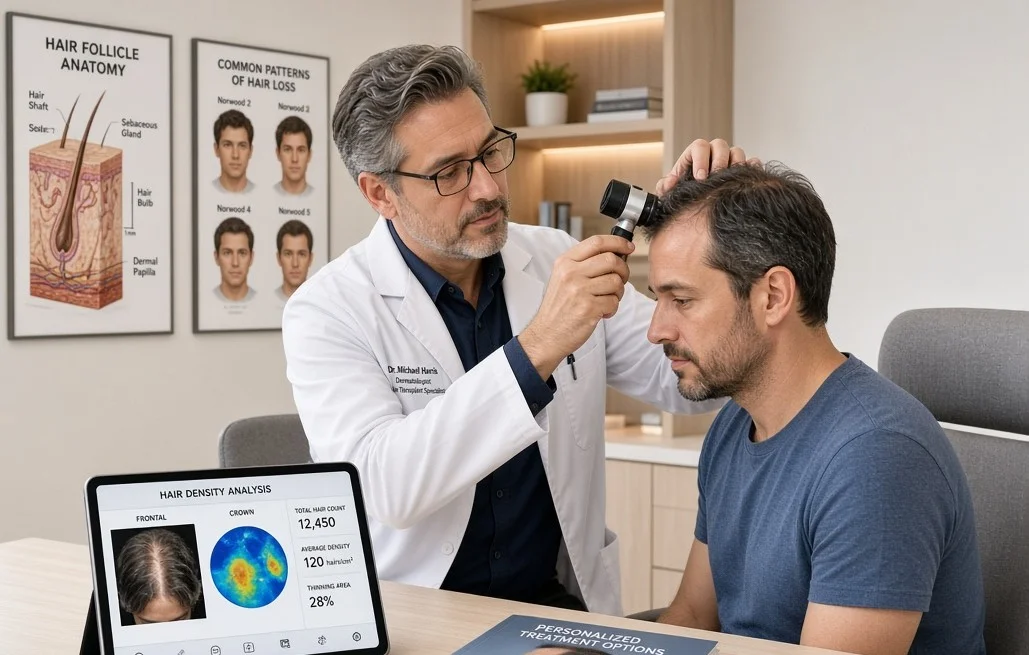
A hair transplant is often suitable for men and women experiencing pattern baldness, which can be measured using the Norwood scale for men. Candidates usually have stable hair loss and enough healthy hair in their donor area, typically at the back or sides of the head. The surgeon needs to be able to move enough grafts to cover the thinning areas.
However, a hair transplant is not for everyone. People with widespread hair thinning or not enough healthy hair follicles in their donor area may not be good candidates. Certain medical conditions can also affect suitability. Only a doctor can assess your specific situation and determine if a hair transplant is a good option for you. Your age and the cause of your hair loss also play a role in this decision.
How does the procedure work?
The hair transplant procedure involves several key steps. Most procedures happen under local anesthesia, which numbs the treatment areas so you do not feel pain during the surgery.
Consultation
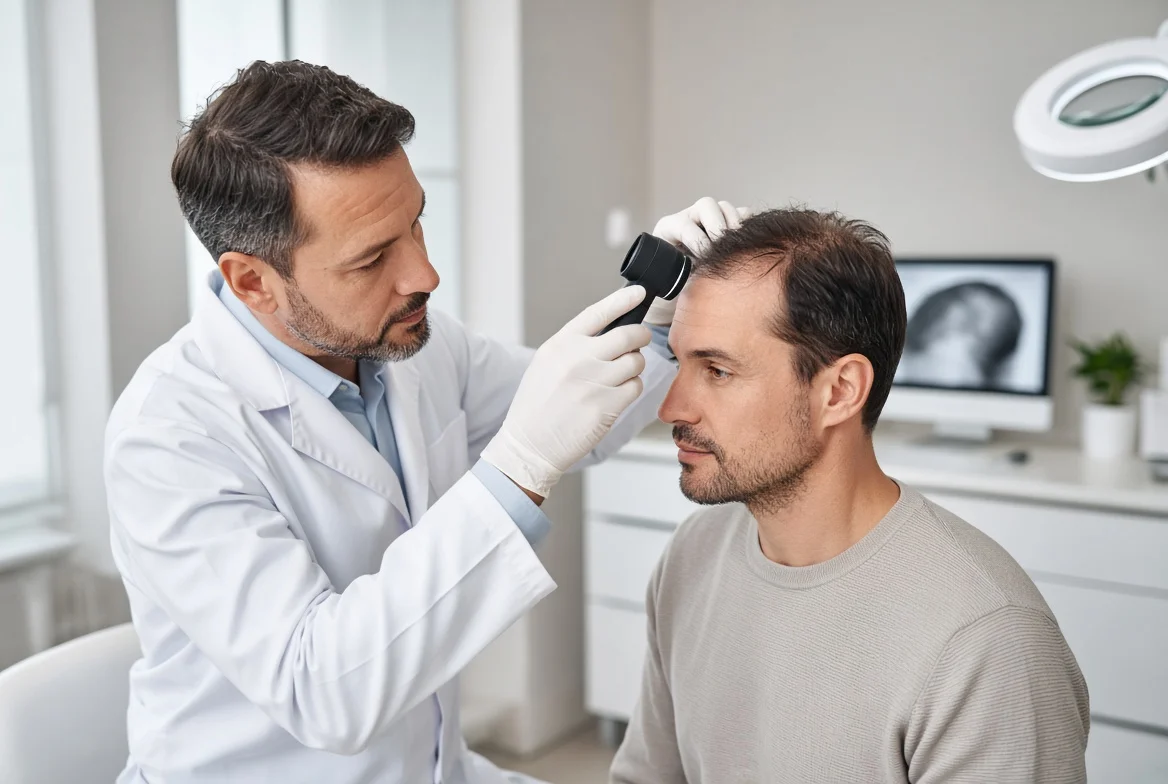
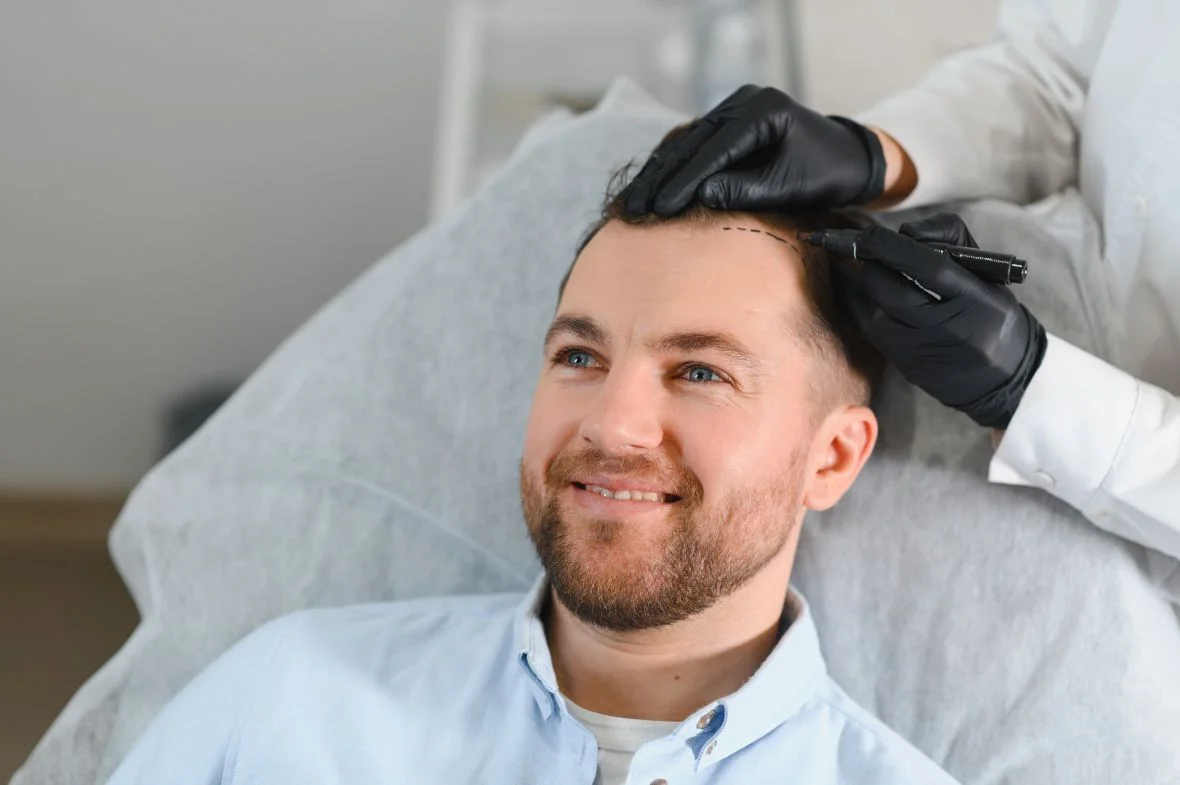
Before the procedure, you will have a detailed consultation with your surgeon. During this meeting, the surgeon assesses your hair loss pattern, the quality and density of your donor area, and discusses your goals. Together, you plan the new hairline and decide on the density for the recipient area, including the crown (vertex) if needed. This planning helps ensure the results look natural.
Extraction
The next step is to extract the hair follicles from the donor area. For FUE and DHI, this means carefully removing individual follicular units. The surgeon uses a small punch tool to make tiny circular incisions around each unit. Then, the units are gently pulled out. It is important to avoid transection, which is damage to the hair follicle during extraction, to ensure the grafts remain healthy.
Implantation
After extraction, the grafts are prepared for implantation. If you are having an FUE procedure, the surgeon first creates tiny channel openings in the recipient area using a fine blade or needle. The extracted grafts are then carefully placed into these openings. For DHI, the surgeon uses an implanter pen to create the channel and implant the graft at the same time. This method allows for precise control over the depth, angle, and direction of each implanted hair, which can contribute to a natural appearance.
Recovery
After a hair transplant, you can expect some scabbing and swelling in both the donor and recipient areas. This is a normal part of the healing process. Your surgeon will provide specific aftercare instructions, including how to gently wash your hair and how to sleep to protect the newly implanted grafts.
The small scabs usually fall off within the first weeks. Swelling also typically goes down during this time. You may experience shock loss, which is when some of the transplanted hairs fall out. This is a common and temporary part of the process, known as the shedding phase. New hair growth usually begins some months after the procedure. The full results, including the final density and growth pattern, become clear over many months as the new hair matures.
What are the risks and limits?
Like any surgical procedure, a hair transplant carries some risks. These can include infection, scarring in the donor or recipient areas, and uneven growth of the transplanted hair. The graft survival rate can vary, meaning not all transplanted grafts may grow.
There are also limits to what a hair transplant can achieve. The number of grafts available from your donor area is limited, which means there is a limit to the total density that can be created. The final result depends on many factors, including your natural hair characteristics, the extent of your hair loss, and how well you follow aftercare instructions. Results vary from person to person, and a doctor can discuss what is realistic for your specific case.
Frequently asked questions
Does a hair transplant hurt?
The procedure uses local anesthesia, which numbs the areas being treated. You should not feel pain during the extraction or implantation steps. You might feel some pressure or minor discomfort, but serious pain is rare.
How long do hair transplant results last?
The hair follicles transplanted from the donor area are usually resistant to the hormones that cause pattern baldness. This means the transplanted hair typically lasts a lifetime. However, your existing non-transplanted hair may continue to thin over time.
Will my hair look natural after a transplant?
The goal of a hair transplant is to achieve a natural look. A skilled surgeon pays close attention to the design of the hairline and the angle and direction of hair growth. This helps the transplanted hair blend with your existing hair.
When can I return to my daily activities?
Most people can return to light, non-strenuous activities within a few days after the procedure. Strenuous exercise and heavy lifting are usually not recommended for a few weeks to allow the grafts to settle. Your surgeon will give you specific advice.
What is PRP and is it used with hair transplants?
PRP (platelet-rich plasma) is a treatment that uses a concentration of your own blood platelets. Some clinics offer PRP as an additional therapy alongside a hair transplant. The idea is that growth factors in PRP may help support the healing process and encourage hair growth, though more research is ongoing.