Understanding Hair Follicles and Hair Growth for a Transplant
Learn about hair transplant procedures like FUE and DHI, who is a good candidate, what to expect during recovery, and common questions patients ask.

Understanding Hair Follicles and Hair Growth for a Transplant
Medically reviewed by Dr. Ersun Cobanoglu · Last reviewed August 3, 2026 · 7 min read
A hair transplant moves healthy hair follicles from one part of your head to another area where hair is thinning. Each hair follicle contains the root of a single hair and plays a key role in hair growth. Knowing how these follicles work helps you understand the hair transplant process and what results you can expect.
What is a hair transplant?
A hair transplant is a surgical procedure that moves hair follicles from a part of your scalp with dense hair to an area with less hair. The goal is to create a fuller, more natural-looking head of hair. The procedure involves taking individual hair follicles, also called grafts, from a 'donor area' – typically the back or sides of your head – and placing them into a 'recipient area' where you want new hair to grow.
Two main methods for hair transplantation are FUE (follicular unit extraction) and DHI (direct hair implantation). FUE involves taking individual hair follicles directly from the donor area. The surgeon uses a small punch tool to extract each follicular unit, which usually contains one to four hairs. DHI is a newer form of FUE where the surgeon uses a special pen-like tool to extract the hair follicles and implant them directly into the recipient area without needing to create separate channels first. This method combines extraction and implantation into one step.
Who is it suitable for?
A hair transplant can be a good option for many people experiencing hair loss. It is often suitable for men with male pattern baldness, which is hair loss on the front, top, or crown (vertex) of the head. Women experiencing certain types of hair thinning may also be candidates.
The success of a hair transplant depends on several factors. You need a healthy 'donor area' with enough hair follicles that can be moved. Your overall health is also important. Some medical conditions or medications may affect your suitability for the procedure. It is important to discuss your medical history with your surgeon.
A hair transplant may not be suitable for everyone. For example, people with very widespread hair thinning across the entire scalp, or those with certain autoimmune conditions that cause hair loss, might not be good candidates. Only a surgeon can tell you if a hair transplant is right for you after a full examination.
How does the procedure work?
Consultation
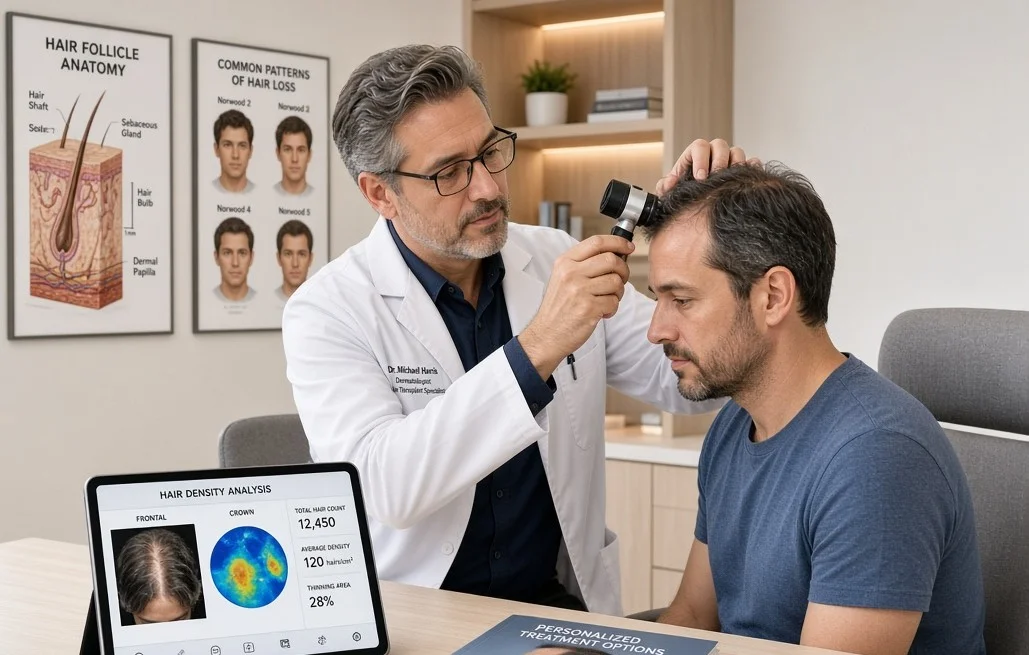
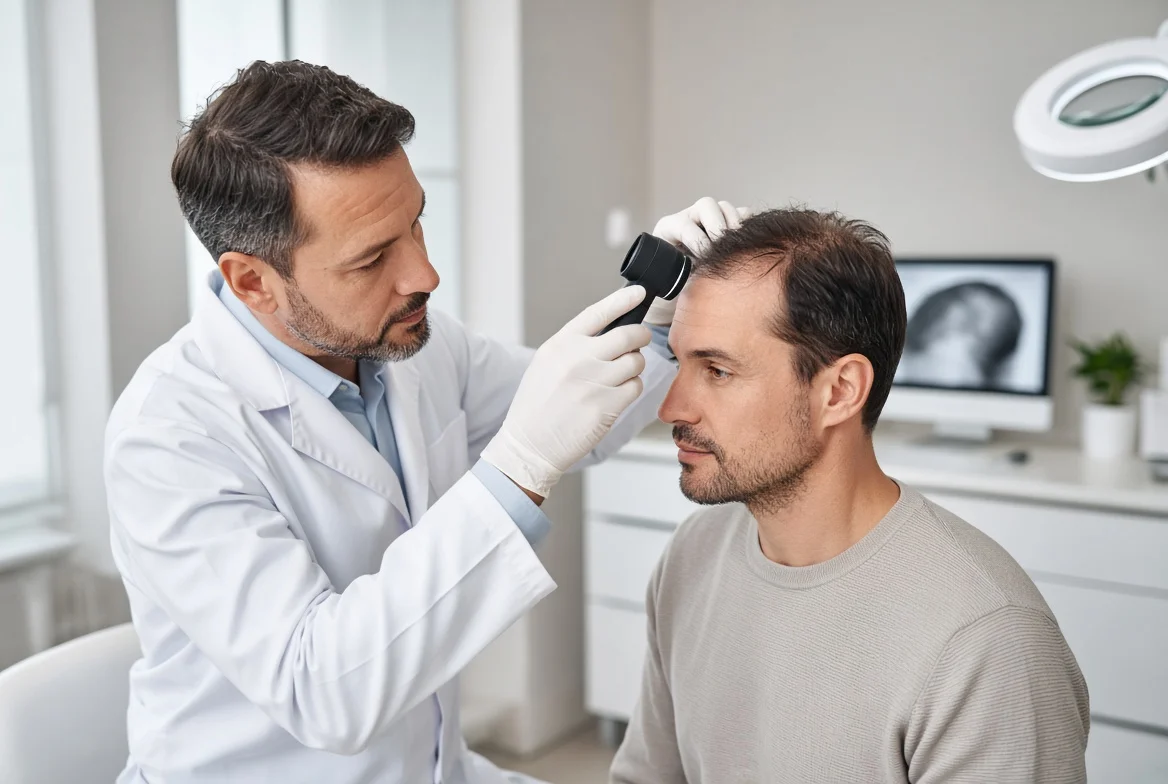
The first step is a detailed consultation with your surgeon. During this meeting, the surgeon will examine your hair loss pattern, the quality of your donor area, and discuss your desired outcome. They will explain the different techniques, such as FUE or DHI, and help you decide which method is best for you. This is also when your new 'hairline' will be designed, considering your facial features and age.
Extraction
On the day of the procedure, the surgeon will first apply 'local anesthesia' to numb the donor area. This means you will be awake but will not feel pain during the extraction. For FUE, the surgeon carefully extracts individual 'follicular units' – small groups of one to four hair follicles – from the donor area. For DHI, the special pen tool extracts the follicles one by one.
The surgeon takes great care during extraction to avoid 'transection,' which is damage to the hair follicle. Healthy follicles are important for successful hair growth in the recipient area. After extraction, the grafts are kept in a special solution to ensure their health before implantation.
Implantation
Once the grafts are ready, the surgeon numbs the 'recipient area' of your scalp. For FUE, tiny incisions, called 'channel opening,' are made in the recipient area. These channels determine the direction, angle, and 'density' of the new hair growth. The surgeon then carefully places each individual graft into these channels. With DHI, the surgeon uses the special pen tool to implant the extracted grafts directly into the recipient area, controlling the angle and depth for a natural look.
Recovery
After your hair transplant, you can expect some common effects as your scalp heals. You may notice some 'swelling' in the forehead and around the eyes, which typically reduces within the first days. Small 'scabbing' will form around the newly implanted grafts and in the donor area. These scabs usually fall off within the first weeks, revealing the new hair follicles underneath.
Your surgeon will provide specific 'aftercare' instructions. These instructions often include how to wash your hair gently and what activities to avoid for a period. Following these instructions carefully helps to ensure the best possible results and supports a good 'graft survival rate'.
Many patients experience 'shock loss,' or a 'shedding phase,' a few weeks after the procedure. This is a normal part of the process where the newly transplanted hairs fall out. New hair growth usually begins several months later. The full results of the transplant become visible over time as the new hair grows and thickens.
What are the risks and limits?
Like any surgical procedure, a hair transplant carries some risks. 'Infection' is a possible risk, though it is rare with proper hygiene and aftercare. Some patients may experience temporary numbness in the treated areas.
'Scarring' is also a consideration. With FUE and DHI, the donor area typically has very small, dot-like scars that are often not noticeable, especially if you keep your hair slightly longer. The appearance of scars can vary by patient and skin type. The 'density' of the transplanted hair may also vary depending on the quality of your donor hair and the size of the area being treated.
A hair transplant moves existing hair follicles; it does not create new ones. This means there is a limit to how much hair can be transplanted based on your available donor hair. The final outcome can vary from person to person, and it is important to have realistic expectations. Your surgeon will discuss these limits with you during your consultation.
Frequently asked questions
Does a hair transplant last forever?
The hair follicles transplanted during the procedure are typically taken from areas of your scalp that are resistant to hair loss. This means the transplanted hair usually continues to grow for a lifetime, similar to the hair in the donor area.
Will my hair look natural?
Modern hair transplant techniques, like FUE and DHI, aim for a very natural look. Surgeons carefully consider the direction, angle, and density of the transplanted hair to match your existing hair growth pattern and create a natural hairline.
Is the procedure painful?
The procedure is performed under local anesthesia, which numbs the scalp. You may feel some pressure or minor discomfort during the injections, but you should not feel pain during the extraction or implantation of the grafts. After the anesthesia wears off, you might experience mild soreness or discomfort, which can usually be managed with pain relief medication.
When will I see results?
New hair growth typically begins several months after the procedure. The transplanted hairs go through a shedding phase first. Noticeable growth often starts around four to six months, with the full results becoming more apparent as the new hair matures over several months to a year.
Can women get a hair transplant?
Yes, women can get a hair transplant, especially if they have a clear pattern of hair thinning and a healthy donor area. The suitability for women depends on the specific cause and pattern of their hair loss. A consultation with a surgeon is needed to determine if it is a good option.